Top Services Offered by a General Dentist


Most people think of a general dentist as the professional who checks for cavities, cleans teeth, and tells patients to floss more often. That description is not wrong, but it leaves out the real breadth of care. In day-to-day practice, a general dentist manages far more than routine cleanings. This is often the clinician who notices early warning signs, treats active disease, restores damaged teeth, relieves pain, and helps patients keep their mouths functional and comfortable over the long term.
A good way to understand the role is to think of a general dentist as the primary care provider for oral health. Some treatments stay entirely within the general practice. Others begin there and, if needed, move to a specialist. Either way, the general dentist is usually the first point of contact, the person who gathers the full picture and decides what makes sense clinically, financially, and practically for the patient sitting in the chair.
That scope matters because oral health rarely follows a tidy script. One patient arrives for a cleaning and ends up needing a cracked filling replaced. Another comes in for a sore jaw that turns out to be nighttime clenching. A child may need sealants, while a retiree may need help keeping dry mouth from damaging otherwise healthy teeth. The services offered by a general dentist reflect that variety.
Preventive care is the foundation
If there is one area where general dentistry earns its value over and over again, it is prevention. Preventive visits do not look dramatic from the outside, but they are where many expensive and painful problems are avoided.
A standard preventive appointment typically includes a clinical exam, professional cleaning, and periodic imaging when necessary. The cleaning removes hardened tartar that brushing and flossing cannot lift at home. It also gives the dental team a chance to see where plaque tends to accumulate, whether gums bleed easily, and whether home care habits are working. In practice, these details matter. The patient who brushes carefully but misses the lower front teeth because of crowding needs different guidance than the patient whose recession is linked to brushing too hard with a stiff-bristled brush.
Exams are not just cavity hunts. A thorough general dentist also checks the health of the gums, the fit of old restorations, the way the teeth come together, the soft tissues of the cheeks and tongue, and the condition of the jaw joint. Even a quick visual change, a rough edge on a filling, a small white patch, a tooth wearing faster than expected, can change the entire direction of care.
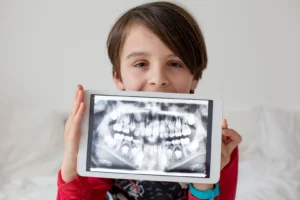
Dental X-rays often become part of this preventive picture. They help detect decay between teeth, monitor bone levels, assess developing teeth, and spot infections that are not obvious clinically. Good practices do not order them casually. They balance diagnostic value with patient need, age, risk level, and timing. A low-risk adult with stable oral health may need bitewing X-rays less often than someone with frequent decay or extensive past dental work.
Preventive care also includes fluoride treatments, sealants for children and some cavity-prone adults, and individualized education. That last part is often underestimated. Advice only works when it fits real life. Telling a teenager to stop sports drinks entirely may be unrealistic. Showing that same teenager how rinsing with water afterward, reducing sipping time, and using a fluoride toothpaste can lower harm is far more effective.
Dental cleanings and gum maintenance
People often use the phrase "cleaning" as if it covers everything, but there are important differences within that category. A routine prophylaxis is designed for patients whose gums are generally healthy or who have only mild gingivitis. The goal is to remove plaque, tartar, and surface stains before deeper periodontal disease develops.
For patients with established gum disease, the service changes. A general dentist may provide scaling and root planing, often called deep cleaning, when the tissues around the teeth show deeper pocketing, inflammation, and bone loss. This is not just a more vigorous version of a regular cleaning. It is a therapeutic procedure aimed at controlling infection below the gumline and helping the tissue reattach as much as possible.
After active gum treatment, many patients move into periodontal maintenance. This is one of the most valuable services a general dentist can offer because gum disease tends to be chronic rather than something that is simply cured once. Patients often feel frustrated when they hear they need more frequent maintenance, usually every three or four months, but the explanation is straightforward. Bacterial colonies repopulate, inflammation returns quickly in susceptible mouths, and bone that has been lost does not regenerate on its own.
Clinically, this matters beyond the mouth. Inflamed gums bleed, feel sore, and threaten tooth stability. They also make eating and home care harder, which starts a cycle of worsening disease. A general dentist who recognizes these patterns early can often keep patients from reaching the stage where surgical periodontal intervention General Dentist becomes necessary.
Diagnosing and treating cavities
Restorative care remains one of the core services provided by a general dentist. Cavities are still extremely common, but the treatment plan is rarely one-size-fits-all. The size of the lesion, the location, the patient's age, their decay history, bite forces, and esthetic concerns all affect the recommendation.
Small areas of early enamel demineralization may not need drilling right away. In some cases, especially when caught early and when patient habits improve, a general dentist may monitor the area, recommend fluoride, and focus on diet and hygiene changes. That decision requires judgment. Watch too long, and the lesion can break through into dentin and expand quickly. Restore too early, and healthy tooth structure is sacrificed unnecessarily.
When a filling is appropriate, composite resin is commonly used, particularly for visible areas and many back teeth as well. Modern composite materials bond to tooth structure and look natural, but they are technique-sensitive. Moisture control, bite adjustment, and case selection influence how long they last. In high-pressure biting zones or very large restorations, another material or a different type of restoration may make more sense.
Patients are often surprised to learn that replacing old fillings is a significant part of restorative dentistry. Many existing restorations fail not because the original treatment was poor, but because materials age, margins wear, teeth flex, and recurrent decay develops around edges over time. A ten-year-old filling may still look decent to a patient, but if it is leaking or cracked, replacing it early can prevent a much larger repair later.
Crowns, inlays, and the art of saving compromised teeth
When a tooth has lost too much structure for a simple filling, a general dentist may recommend a crown, inlay, or onlay. These restorations are used when the goal shifts from patching a defect to reinforcing the remaining tooth.
Crowns are commonly needed after large fractures, extensive decay, or root canal treatment. The reason is mechanical as much as biological. A tooth that has been hollowed out by decay or previous fillings can become brittle under chewing forces. Covering it helps distribute those forces more predictably. Not every root canal tooth needs a crown immediately, but posterior teeth often do because they absorb the highest loads.
Inlays and onlays can be a conservative middle ground. They restore large portions of a tooth without covering it completely. In practices that prioritize preserving natural structure, these options are worth discussing. They are not ideal for every case, especially if decay extends too far or if the tooth has multiple weak cusps, but they can be an excellent balance of strength and conservation when used well.
One common misunderstanding is that a crown "fixes" a tooth forever. It does not. It protects and restores function, but the tooth underneath still depends on healthy gums, good home care, and careful monitoring of the crown margins. Patients who think a crowned tooth no longer needs flossing are often the ones who return years later with decay hidden under the edge.
Root canal therapy and relief from infection
Few dental procedures carry more anxiety than root canal treatment, yet in routine general practice it is often one of the services that brings the fastest relief. When the pulp inside a tooth becomes inflamed or infected, usually because of deep decay, trauma, or a crack, the pain can be relentless. Heat sensitivity, throbbing, pressure pain, and swelling are common signs, though some infected teeth are surprisingly quiet.
A general dentist may perform root canal treatment on many straightforward cases, especially single-rooted teeth and carefully selected premolars or molars. More complex anatomy, retreatment cases, severe curvature, or difficult diagnosis may be referred to an endodontist. That referral decision is not a weakness. It is good clinical judgment. The best outcome is the priority, not keeping every procedure in-house.
The service itself involves removing infected tissue, cleaning and shaping the internal canal system, disinfecting it, and sealing it. From a patient standpoint, the most important point is often this: modern root canal treatment is typically far more comfortable than the untreated infection it addresses. Local anesthesia is effective, and most postoperative discomfort is manageable with standard measures.
What matters just as much is what happens after. A tooth that has had root canal therapy still needs proper restoration. If it is left with only a temporary filling for too long, bacteria can leak back in or the tooth can fracture. General dentists spend a surprising amount of time repairing the consequences of delayed follow-up after endodontic treatment.
Tooth extractions and practical decision-making
Even in a profession built around preserving teeth, extractions remain an important service offered by a general dentist. Sometimes the choice is obvious, as with a severely broken tooth below the gumline or a tooth loosened by advanced periodontal disease. More often, the decision is a matter of balancing prognosis, cost, function, and patient goals.
For example, an infected tooth with very limited remaining structure may technically be salvageable through root canal treatment, buildup, crown lengthening, and a final crown. On paper, that is possible. In practice, it may not be the wisest investment if the long-term outlook is poor. Good general dentists have these conversations candidly. Saving a tooth at any cost is not always the same as serving the patient well.
Simple extractions are frequently handled in a general practice. More difficult surgical removals, impacted teeth, or cases involving proximity to important structures may be referred to an oral surgeon. That division is normal and benefits patients. Not every office is equipped for every level of complexity.
After an extraction, the service does not end when the tooth is out. A thoughtful general dentist discusses next steps early, especially if the missing tooth affects chewing, appearance, or the risk of shifting. Bone loss after extraction is real, and timing can matter if a bridge, denture, or implant is being considered later.
Tooth replacement options and long-term function
Replacing missing teeth is one of the areas where general dentists often guide patients through several possible paths. The exact treatment may be provided in the office, coordinated with a specialist, or both.
Bridges remain a reliable option in many cases. They can restore function and appearance without surgery, and for some patients they are a practical answer, particularly when the neighboring teeth already need crowns. The trade-off is that a traditional bridge usually requires preparation of adjacent teeth, which may be less appealing if those teeth are otherwise healthy.
Partial dentures and full dentures are another major service in many general practices. Dentures have improved, but they still demand realistic expectations. A lower denture, in particular, can be frustrating because of tongue movement and limited surface area for suction. The best outcomes happen when patients are told honestly that adaptation takes time, sore spots often need adjustment, and chewing efficiency will not feel identical to natural teeth.
Implant restoration is also commonly coordinated by a general dentist. In some practices, the dentist places implants; in others, a specialist handles surgical placement while the general dentist designs and delivers the final crown. Either model can work well when communication is strong. What patients often appreciate is having a familiar clinician help them weigh whether an implant is justified for a given tooth, especially when cost is a serious factor.
Cosmetic services that overlap with health
Cosmetic dentistry is sometimes treated as a separate category, but in practice it often overlaps with function and oral health. A general dentist may provide whitening, bonding, contouring, veneers in selected cases, and replacement of old restorations that have become discolored or misshapen.
Whitening is one of the most requested services because it is relatively conservative. Custom take-home trays and in-office whitening both have a place. The better choice depends on tooth sensitivity, desired speed, the type of staining, and whether restorations are present. Patients are often disappointed when they are not told in advance that crowns and fillings will not whiten with the surrounding teeth.
Bonding can be a smart, modest intervention for chipped edges, small gaps, or shape irregularities. It is less invasive than veneers and more affordable, though it may stain or wear faster over time. For a college student with a chipped front tooth before graduation photos, bonding can be ideal. For a heavy grinder with multiple edge fractures, a more durable plan may be necessary.
The strongest cosmetic work from a general dentist is usually the kind that respects biology. Teeth can be made brighter and more symmetrical without being made overly thin, overly opaque, or disconnected from the patient's face. The trend toward unnaturally uniform smiles has softened in many practices for a reason. Longevity and credibility matter.
Emergency dental care when patients need help fast
Emergency visits are among the most important services a general dentist provides, not because they are glamorous, but because they prevent suffering and stop small problems from becoming major ones. Dental pain has a way of dominating a person's entire day. Sleep suffers, concentration drops, and eating becomes difficult.
Emergency care often involves cracked teeth, broken fillings, abscesses, trauma, lost crowns, swelling, or severe sensitivity. Sometimes the service is definitive treatment. Sometimes it is stabilization, diagnosis, and pain control until complete care can be delivered. Both are valuable.
One of the more challenging aspects of emergency dentistry is that symptoms do not always point cleanly to the cause. A patient may insist the upper left molar is the problem when the actual source is a lower cracked tooth referring pain. Another may think they need an extraction when the tooth is restorable. This is where the diagnostic role of a general dentist becomes especially clear. Listening, testing, comparing findings, and not rushing into irreversible treatment can make the difference between solving the problem and merely reacting to it.
Oral cancer screenings and soft tissue evaluation
Routine examinations by a general dentist include more than teeth and gums. Screening the lips, tongue, floor of the mouth, palate, cheeks, and throat area is a standard and important service. Many abnormalities are harmless. Some are related to irritation, cheek biting, or friction. A few require closer observation, biopsy, or referral.
The value here lies in consistency. Patients rarely inspect the sides of their tongue or the tissue under it. Subtle changes are easy to miss, especially if they do not hurt. A general dentist who sees a patient regularly is well positioned to notice when a tissue area looks new, persistent, or suspicious.
This is also one reason regular dental visits matter even for people who think their teeth are fine. Oral health care is not only about decay. It is about surveillance of the entire mouth.
Night guards, bite issues, and jaw discomfort
A significant number of patients have problems related to grinding, clenching, or unstable bite relationships, even if they do not realize it. The signs show up in chipped enamel, flattened chewing surfaces, sore jaw muscles, headaches, neck tension, and teeth that feel tender in the morning.
General dentists frequently diagnose these patterns and provide appliances such as custom night guards. This service sounds simple, but the details matter. A well-made guard should fit securely, protect the teeth, and be adjusted so it does not create new bite problems. Store-bought guards may be acceptable for temporary use, but they are often bulky and less precise.
Jaw discomfort can be more complicated. Not every clicking jaw needs treatment, and not every facial pain problem is caused by the temporomandibular joint. A careful general dentist sorts through habits, muscle tenderness, range of motion, stress factors, and dental wear before choosing a plan. Sometimes a guard helps. Sometimes the issue is posture, medication-related clenching, or an unrelated pain condition that warrants referral.
Care across different stages of life
One underappreciated strength of a general dentist is continuity. Unlike highly focused specialists, general dentists often treat patients across decades. That long view changes the kind of care they provide.
For children, services often center on prevention, eruption monitoring, sealants, hygiene coaching, and early cavity management. The challenge is as much behavioral as clinical. A calm first experience matters. So does helping parents understand that frequent snacking and bedtime milk in a bottle can undo an otherwise good brushing routine.
For working-age adults, the pattern often shifts toward maintenance, repair of older dental work, management of stress-related grinding, and balancing care with finances and schedule constraints. Many adults return to the dentist after years away with a mix of embarrassment and urgency. The best general dentists know how to meet them without judgment and prioritize what actually needs attention first.
For older adults, dry mouth, gum recession, root decay, medication effects, dexterity limitations, and the condition of existing crowns, bridges, or dentures come to the forefront. A technically sound treatment plan can still fail if it ignores arthritis, caregiver support, or whether the patient can manage cleaning around complex restorations. Experienced general dentists take those realities seriously.
What makes these services effective
The list of services is broad, but success depends less on the menu and more on how care is delivered. A strong general dental practice combines prevention, diagnosis, treatment skill, and case selection. It also knows when not to proceed, when to monitor, and when to refer. That judgment is part of the service.
Patients often assume the "best" treatment is the most advanced or the most expensive. That is not always true. The best treatment is the one that fits the tooth, the mouth, the patient's habits, and the likely future. A beautifully made crown in a mouth with uncontrolled decay is not a full solution. A cosmetic fix on a patient with active grinding may chip again quickly. Even a simple filling can fail early if the patient is fighting severe dry mouth from medication and no one addresses it.
This is why the role of the General Dentist remains so central. The work is not confined to one procedure or one part of the mouth. It is the ongoing management of oral health in all its ordinary complexity, from routine cleanings to urgent pain relief, from childhood sealants to replacement of worn restorations decades later. The top services offered by a general dentist are valuable not only because they treat problems, but because they connect prevention, function, appearance, and long-term planning in one place.
When that care is done well, patients do not just leave with cleaner teeth or a repaired filling. They leave with a clearer understanding of what is happening in their mouths, what needs attention now, and what can help them avoid larger problems later. That is the practical, everyday strength of general dentistry, and it is far more comprehensive than many people realize.
Aspenwood Dental Associates and Colorado Dental Implant Center
2900 S Peoria St Ste C, Aurora, CO 80014, United States
+1 303-731-4037
FAQ About General Dentist
How long do teeth fillings last in Aurora, CO?
Fillings can last for years, but they are not lifetime restorations. Their durability depends on the material, the size and location of the filling, chewing forces, and oral hygiene. A general dentist can examine a filling for wear, damage, or new decay and explain whether monitoring, repair, or replacement is appropriate. Age alone does not establish that a filling needs replacement.
How Can I Reduce Dental Anxiety?
Tell the dental team about your concerns when booking and again at your visit. Ask for an explanation of each step, agree on a signal for breaks, and consider slow breathing or headphones if the practice permits them. Discuss pain control and any sedation options with the dentist; suitability depends on your health, medicines, and planned treatment.
When should your child first see a dentist in Aurora?
Arrange the first dental visit within six months after the first tooth appears and no later than the first birthday. Early visits allow the dentist to assess development and discuss brushing, fluoride, feeding habits, and cavity prevention. Ask the practice whether it sees infants and how it handles referrals when a child needs specialist care.
Ends · FRANCISCOMVJT916